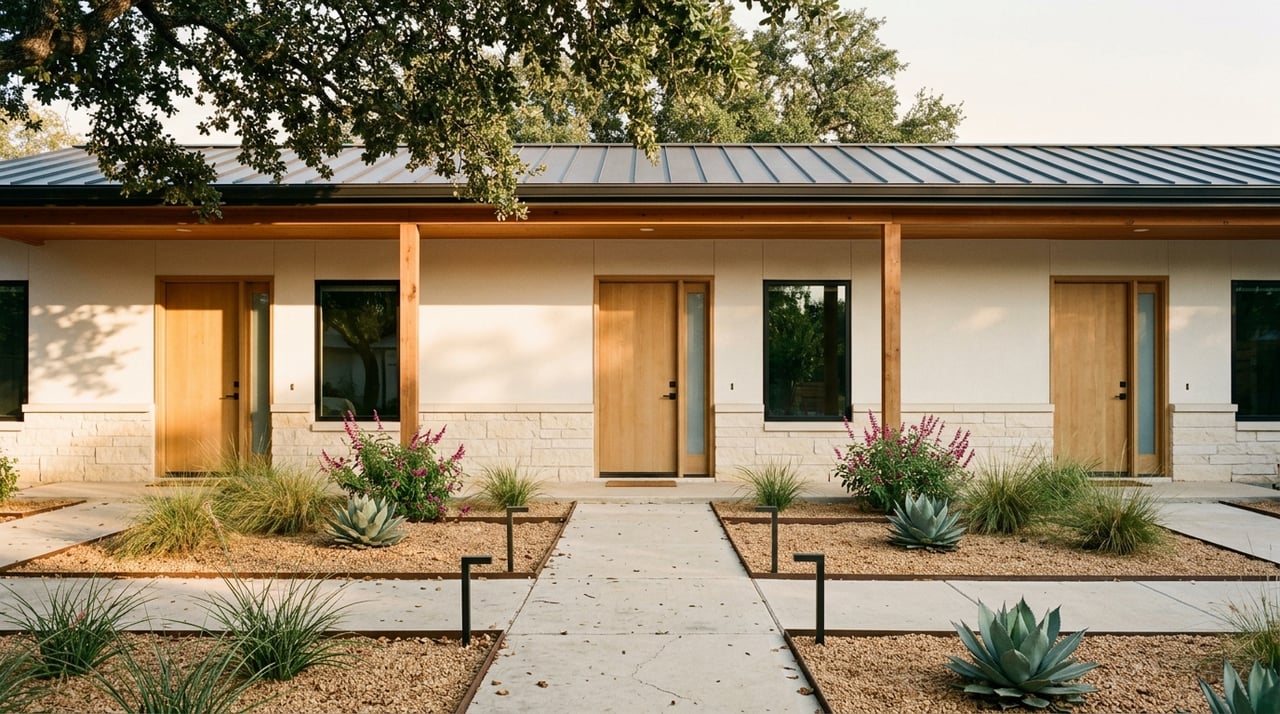
Looking for a small multifamily property in San Marcos? You are not alone. With strong renter demand, a major university presence, and a location right on the I-35 corridor between Austin and San Antonio, San Marcos can be appealing for investors who want duplexes, triplexes, or fourplexes. At the same time, this market has real nuance, from changing occupancy rules to older housing stock and a large pipeline of new units. This guide will help you understand what to watch, where the opportunity may be, and how to evaluate a deal with more confidence. Let’s dive in.
Why San Marcos draws investors
San Marcos is growing quickly. Census QuickFacts estimates the city had 77,830 residents in July 2025, which was up 9.6% from the 2020 census count of 67,553. Population growth alone does not guarantee a good investment, but it does support the case for continued housing demand.
The city also has a renter-heavy profile. The owner-occupied housing unit rate is 30.8%, median gross rent is $1,322, and median monthly owner costs with a mortgage are $1,899. That mix suggests a large share of residents rent rather than own, which can support smaller multifamily strategies.
Location matters too. San Marcos sits on the I-35 corridor between Austin and San Antonio, which helps support demand from students, commuters, and workforce renters. If you are buying for long-term rental income, that broad base of demand is a meaningful advantage.
Small multifamily in San Marcos
When investors say “small multifamily,” they often mean duplexes, triplexes, and fourplexes. In San Marcos, local code language is more specific. Duplexes fall under two-family dwellings, while triplexes and fourplexes can fit into the city’s small multifamily category depending on the site and use classification.
That distinction matters because investor shorthand does not always match city code. Before you get too far into underwriting, you will want to confirm how the property is classified, what uses are allowed, and whether any permits or site-specific rules apply. In a market with active code updates, this step is especially important.
San Marcos already has a meaningful share of this type of housing. The city’s housing needs assessment says 11% of housing units are duplexes, triplexes, or fourplexes. That means you are not chasing a product type the market has never seen, but you still need to evaluate each property in its exact zoning and regulatory context.
Demand drivers behind rental housing
Texas State University demand
Texas State University is the biggest demand anchor in San Marcos. The university reported 44,596 students in Fall 2025, including 9,329 first-year students, and said nearly 10,000 students live on the San Marcos campus. That scale helps explain why roommate-friendly rentals and smaller unit formats can stay relevant here.
Not every small multifamily deal should be treated like student housing, though. Lease structure, unit layout, parking, and occupancy rules can affect whether a property is well suited for student tenants, workforce renters, or a mix of both. The best opportunities often come from matching the property to the right renter profile rather than assuming all demand is the same.
Broader local employment
San Marcos is not supported by the university alone. In the city’s 2025 Consolidated Plan, the largest job sectors were Education and Health Care Services with 10,805 jobs, Retail Trade with 7,785, Arts, Entertainment, and Accommodations with 7,029, and Transportation and Warehousing with 6,871.
That broadens the renter base beyond students. It can also support demand for practical, smaller units that serve people working across different schedules and income levels. If your strategy depends on steady occupancy, this wider job mix is worth paying attention to.
Affordability pressure
Housing affordability remains a major issue in San Marcos. The city estimates that 5,435 renter households and 330 owner households, or 24% of all households, were paying more than 50% of income toward housing costs.
For investors, that can point to demand for smaller, more budget-conscious units and layouts that work well for roommates. It also means rent growth assumptions should stay grounded in what local tenants can realistically afford. A property can look good on paper and still struggle if pricing outruns the local renter pool.
What can make a small deal work
Small multifamily in San Marcos can fit a few different strategies well:
- Workforce-oriented rentals with practical floor plans and durable finishes
- Student-adjacent rentals near key commute routes and campus access points
- Value-add rehabs where improved condition can support stronger leasing
- House-hack style ownership in duplex formats, where one unit may offset part of your housing cost
The right strategy depends on the property itself. In San Marcos, location, condition, and lease structure matter just as much as unit count. A well-located duplex with clean systems and functional parking may outperform a larger but more complicated asset in a tougher pocket.
Risks to underwrite carefully
New supply competition
San Marcos is adding a large amount of multifamily inventory. The city’s September 2025 multifamily report lists 5,737 units under construction and 540 under consideration, with 10,829 units completed since 2012.
That does not mean small multifamily is a bad bet. It does mean you should expect more competition in some areas, especially near major corridors and the university. If you are evaluating rents, concessions, or vacancy assumptions, compare them against the local supply pipeline rather than relying only on older market performance.
Older housing stock and capital needs
Condition matters in this market. The city says 53% of renter-occupied units had at least one selected condition issue, and only 43% had none. It also notes that about one-quarter of renter-occupied housing was built before 1980.
For you, that is a reminder to budget for more than cosmetic updates. Roof age, plumbing materials, electrical systems, HVAC condition, drainage, and foundation performance can all affect returns. In many San Marcos deals, the real story is not just current rent, but how much capital the property will need over the next few years.
Floodplain due diligence
Floodplain exposure deserves close attention in San Marcos. The city notes that the 2015 floods affected many homes and that reconstruction in floodplain areas can trigger insurance and elevation requirements.
If a property is near waterways or in an area with known flood exposure, make that part of your early screening process. Insurance costs, repair standards, and long-term holding expenses can change the math quickly.
Rules and code issues to verify
The regulatory picture in San Marcos is active. The city says the Development Code was most recently amended on January 25, 2025, and that updates to the land development code and design manual were still underway in 2025 and 2026.
That means you should verify the current rules before closing, not just when you first identify a property. A deal that looks straightforward at first glance can shift once you confirm occupancy limits, use definitions, parking rules, or permit requirements.
One recent change stands out for small multifamily investors. In June 2026, the city said Council approved amendments that increased the occupancy restriction limit from two to three unrelated persons. That can be especially relevant for roommate-heavy layouts and properties that appeal to student renters.
If you are reviewing a property that appears to function like student housing, be extra careful. The city’s code materials include special rules for purpose-built student housing, including review of the form lease, a late-delivery housing provision if the unit is not ready on time, and conditional-use criteria tied to transportation access, neighborhood impacts, and consistency with adopted plans.
A practical San Marcos buying checklist
Before you make an offer on a duplex, triplex, or fourplex in San Marcos, it helps to walk through a simple checklist:
- Confirm the property’s exact use classification under local code
- Verify current occupancy rules and whether the layout fits your rental plan
- Review the property’s age, condition, and likely near-term capital needs
- Check whether the site has any floodplain exposure or related insurance concerns
- Compare your rent assumptions against current competing supply
- Evaluate whether the deal fits student-adjacent, workforce, or mixed-demand leasing
- Review any fee, entitlement, or permitting issues that could affect renovations or expansion
This kind of upfront work can save you from expensive surprises later. In a market like San Marcos, careful due diligence is often what separates a stable rental from a stressful one.
How to think about submarkets
Not every part of San Marcos behaves the same way. The city’s pipeline of new multifamily supply means some areas may feel more competitive than others, especially near major corridors and the university.
That is why broad market headlines only take you so far. You will want to study each property in context, including nearby rental options, access patterns, property condition, and the likely tenant base. In a city with both student and workforce demand, the same unit count can perform very differently from one location to the next.
The bottom line on San Marcos small multifamily
San Marcos offers real potential for small multifamily investors, especially if you are looking at duplexes, triplexes, or fourplexes that align with workforce or student-adjacent demand. The city’s growth, renter-heavy profile, large university, and broader employment base all support the case for rental housing.
Still, this is not a market where you want to skip the details. Local code definitions, occupancy rules, aging housing stock, floodplain concerns, and a large wave of new supply can all shape your results. If you approach San Marcos with a clear strategy and solid due diligence, small multifamily can be a smart way to build a foothold in this part of the Hill Country.
If you want local guidance on investment-minded property searches in San Marcos and the surrounding Hill Country, the Bailey Group offers white-glove buyer representation with practical insight into property condition, location, and long-term fit.
FAQs
What counts as small multifamily in San Marcos?
- In San Marcos, duplexes are treated as two-family dwellings, while triplexes and fourplexes can fall into the small multifamily category depending on the site and use classification.
Why is San Marcos attractive for duplex and fourplex investors?
- San Marcos has strong rental demand drivers, including Texas State University, a broader local job base, population growth, and a renter-heavy housing profile.
What occupancy rule should San Marcos multifamily buyers know?
- In June 2026, the city approved an amendment increasing the occupancy restriction limit from two to three unrelated persons, which can matter for roommate-oriented rentals.
Are older San Marcos rental properties riskier to buy?
- They can require closer review because the city reports many renter-occupied units show condition issues, and about one-quarter of renter-occupied housing was built before 1980.
How much new multifamily supply is coming to San Marcos?
- The city’s September 2025 report listed 5,737 units under construction and 540 under consideration, which suggests more competition in some submarkets.
Should floodplain risk matter for San Marcos small multifamily?
- Yes. The city notes past flood impacts and says rebuilding in floodplain areas can trigger insurance and elevation requirements, so floodplain review should be part of your due diligence.