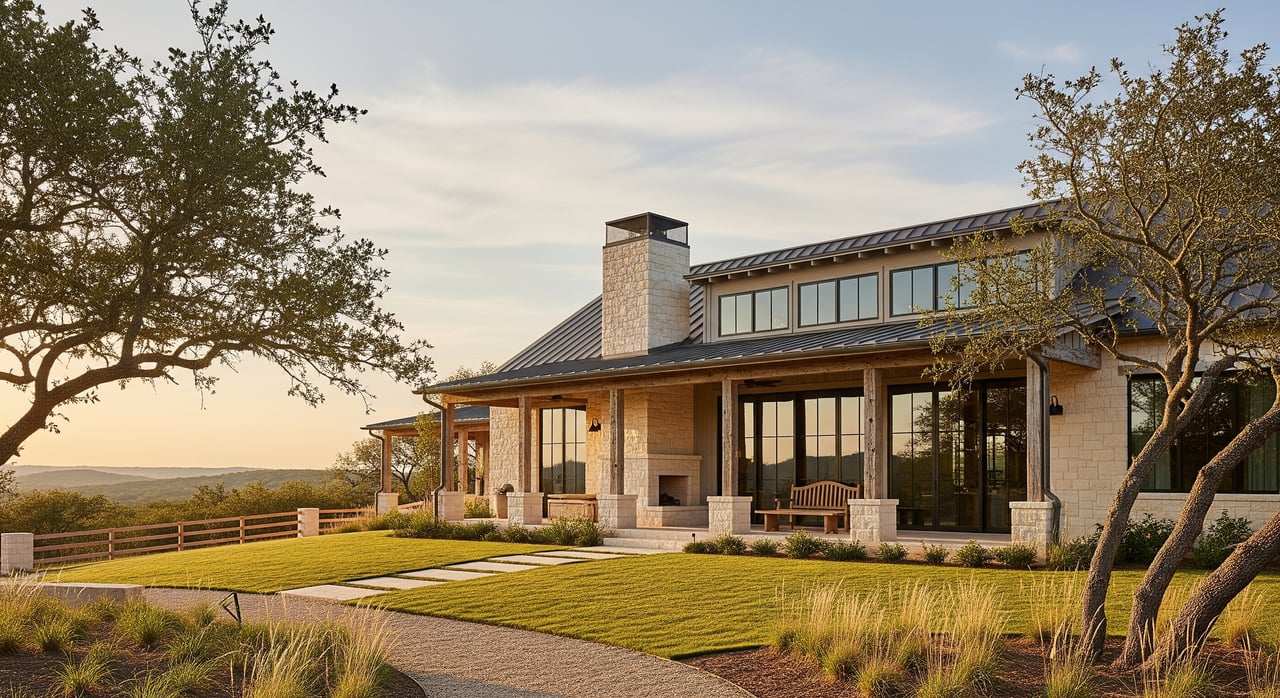
What if you could scan a Driftwood listing and immediately know if it fits your Hill Country vision? When you understand how local styles look and perform, you save time and avoid surprises. Whether you’re eyeing a single-story ranch on acreage or a crisp modern farmhouse with a wraparound porch, you want a home that fits both your lifestyle and the environment. In this guide, you’ll learn how to spot key styles, materials, and outdoor features that work well in Driftwood, plus practical checks for wells, septic, and site conditions. Let’s dive in.
Why Driftwood homes look this way
Driftwood sits in the Texas Hill Country, where hot summers, mild winters, and occasional heavy rain shape design choices. Homes often prioritize shade, cross breezes, and materials that handle heat, sun, and storm events. Wide porches, deep overhangs, and smart window placement help keep interiors comfortable.
Many properties use private wells and septic systems instead of city utilities. Drought, water conservation, and septic permits can influence both site planning and finishes. In rural settings, wildfire and brush management also matter. You’ll often see metal roofs, defensible-space landscaping, and stone hardscapes that balance function with Hill Country character.
Classic Ranch style
Visual cues to spot
- Single-story, low profile with simple rectangle, L, or U plans.
- Wide eaves, hipped or gabled roofs, and attached garages.
- Broad covered porches and large picture windows or sliders to the patio.
- Native limestone, stucco, wood, or brick with metal or shingle roofs.
Why it fits Driftwood
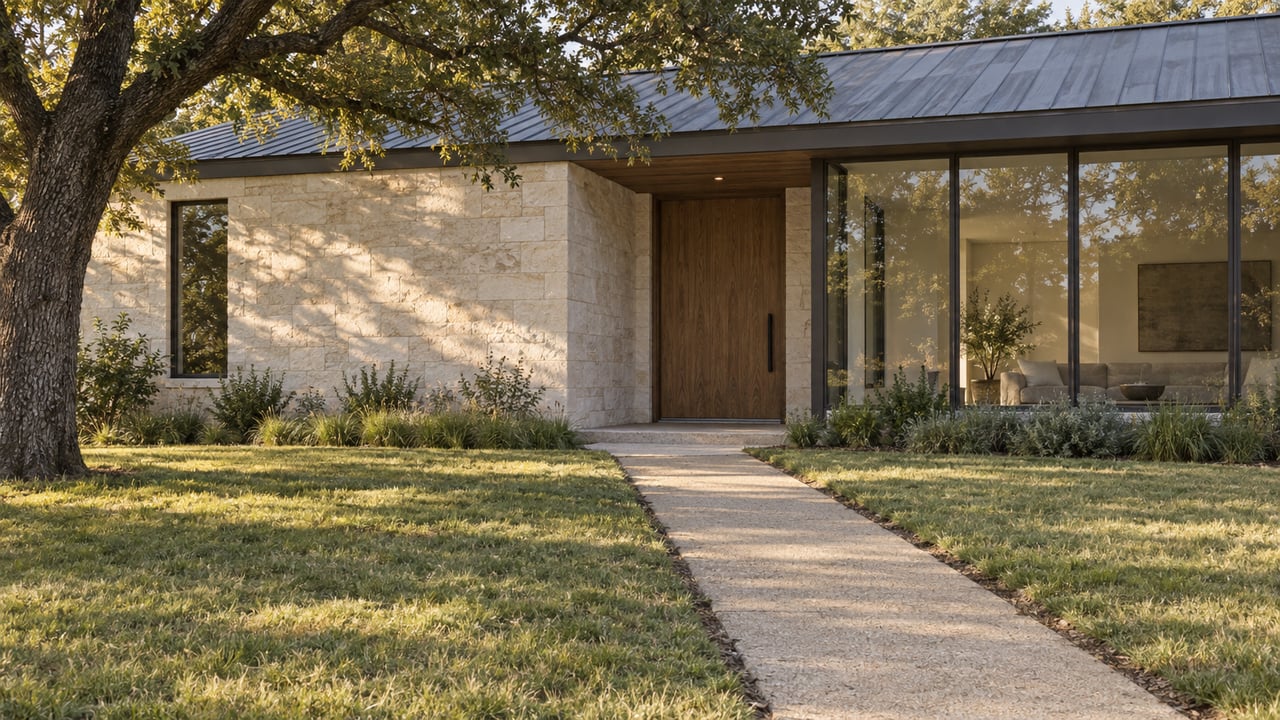
Classic ranch homes sit naturally on acreage and make indoor–outdoor living easy. Long porches and deep overhangs help manage summer sun and extend living space outside. The single-level layout often pairs well with pools, outdoor kitchens, and shaded dining areas.
Materials and performance
Stone and masonry add durability and thermal mass, which can help with temperature swings. You’ll often see limestone chimneys and accents that tie the house to the land. Asphalt shingles are common for cost efficiency, while standing-seam metal roofing boosts durability and heat reflection.
Search tips
Look for “single story,” “broad covered porch,” “L-shaped” or “U-shaped,” and “large sliders.” If you plan to add outdoor amenities, confirm lot acreage, setbacks, and any community design guidelines early.
Modern Farmhouse style
Visual cues to spot
- Simple gabled massing with steep rooflines.
- Board-and-batten siding, often white or off-white with dark window frames.
- Standing-seam metal roof and prominent front or wraparound porch.
- Stone accents, reclaimed wood, and exposed beams inside.
Why it fits Driftwood
Modern farmhouse brings rural charm together with today’s layouts and clean detailing. The simple roof forms and metal roofing perform well in Hill Country weather. Large windows and doors connect living areas to covered patios, pools, and outdoor kitchens.
Materials and performance
Fiber-cement board-and-batten is popular for lower maintenance while keeping the farmhouse look. Black aluminum windows and big sliders create contrast and indoor–outdoor flow. Pairing those openings with appropriate shading and high-performance glass supports energy comfort.
Search tips
Scan listings for “standing-seam metal roof,” “board-and-batten,” “black windows,” and “wraparound porch.” On acreage, ask about water source, septic permits, and any HOA design rules that may guide exterior finishes.
Contemporary and transitional homes
Contemporary style cues
- Clean, rectilinear massing with flat, shed, or low-slope roofs.
- Expansive glass, clerestory windows, and bold cantilevers or terraces.
- Mixed materials like stucco, steel, concrete, and smooth wood.
Contemporary homes shine on sites with views. Large openings and terraces frame the landscape, while overhangs, porches, and targeted glazing keep heat gain in check. You’ll still find the Hill Country DNA in the hardscape and outdoor living spaces.
Transitional style cues
- Traditional gable silhouettes with modern windows and simplified trim.
- Mixed materials like stone, metal, and timber in a neutral palette.
- Open plans with classic curb appeal.
Transitional design balances timeless exteriors with updated layouts and finishes. It’s a good fit if you want a familiar profile with modern systems and larger windows.
Outdoor living must-haves
Shade and gathering spaces
Covered porches and extended patios are nearly universal in Driftwood. They protect interiors from direct sun and create comfortable spots to relax year-round. Many homes add outdoor kitchens, covered dining, and stone fireplaces or fire pits for cooler evenings.
Pools and shade structures
Pools and plunge pools are common on luxury and second-home properties. Saltwater systems and shaded pool terraces help with comfort and maintenance. Pergolas, trellises, or shade sails often supplement tree cover where the landscape is more open.
Stonework and site design
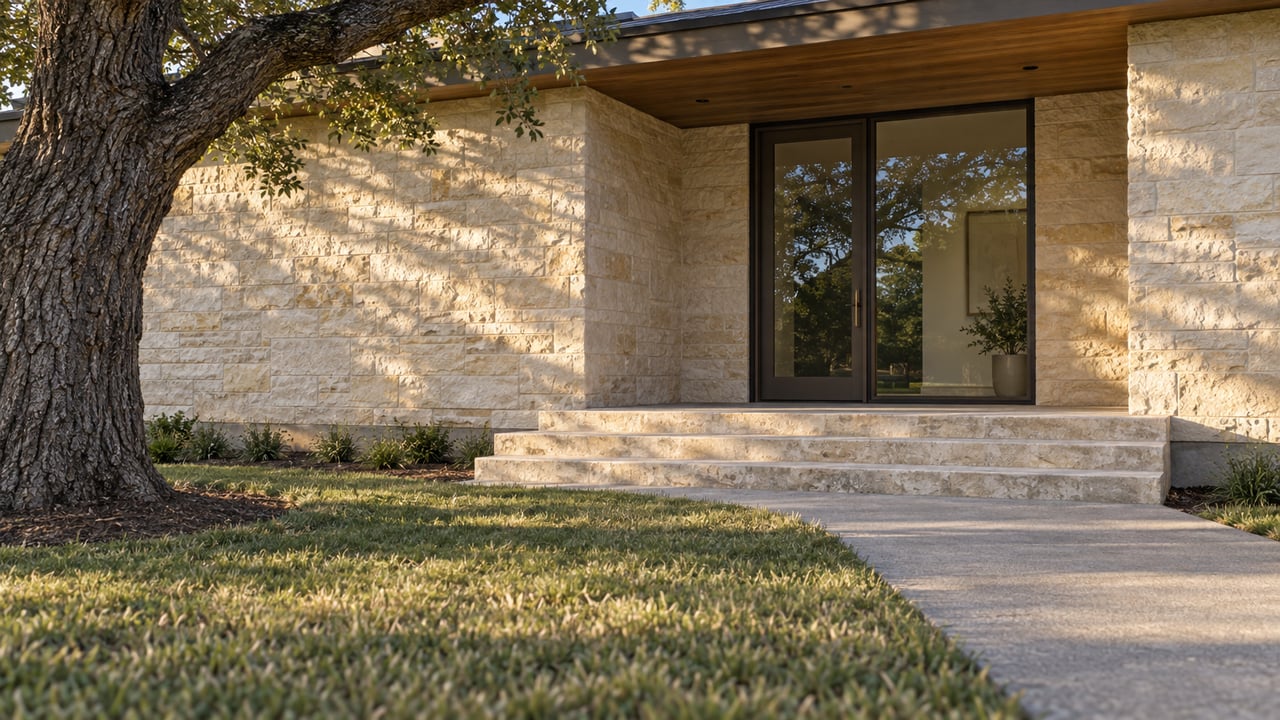
Limestone retaining walls, steps, and patios connect the home to the site. Terracing helps manage slope and runoff while creating usable outdoor rooms. Long drives, porte-cocheres, and gravel or stabilized aggregate driveways carry the ranch aesthetic from gate to entry.
Materials that last here
Stone and masonry
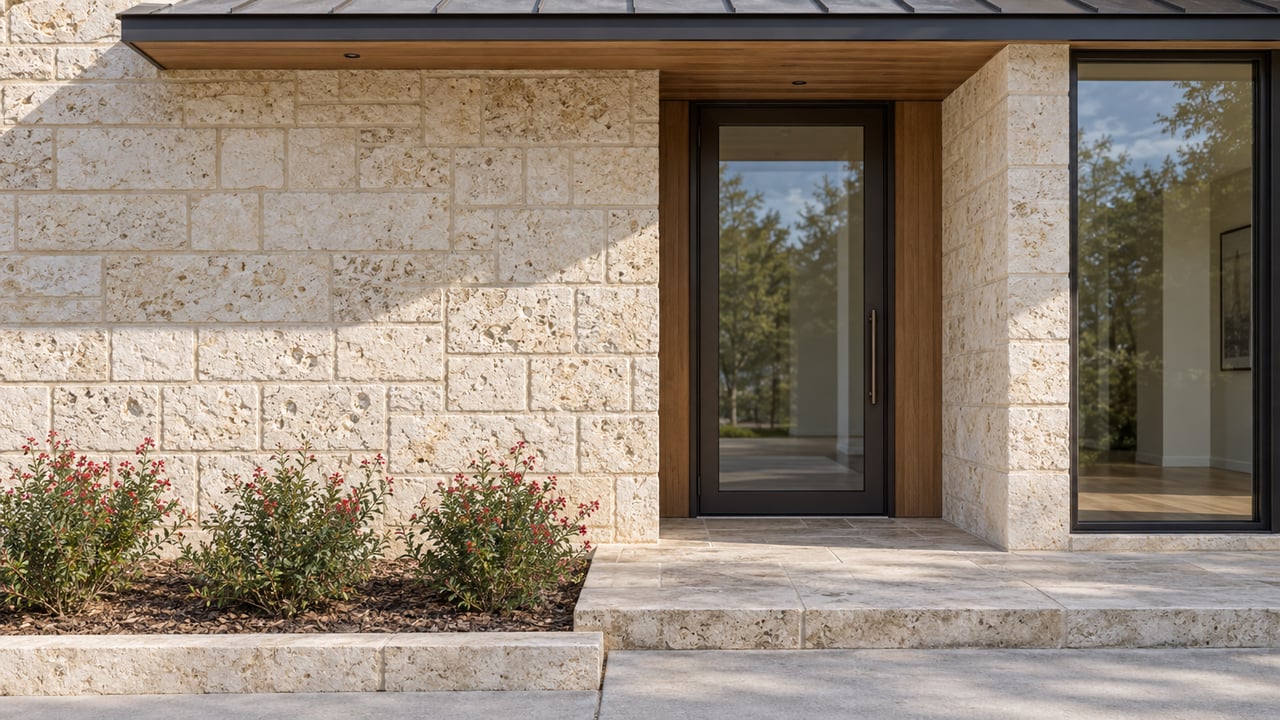
Native limestone is a Hill Country hallmark used for facades, chimneys, and site walls. It’s durable and looks right at home in Driftwood. Plan for occasional maintenance like repointing mortar and checking flashings after heavy weather.
Wood and siding
Cedar and treated wood bring warmth to soffits, eaves, and interior beams. Board-and-batten defines farmhouse and transitional styles, and fiber-cement offers a lower-maintenance alternative with a similar look. Exposed wood still needs periodic sealing where it faces sun and moisture.
Metal and roofing
Standing-seam metal roofs resist heat and offer strong fire performance. Color and reflectivity can improve cooling loads in summer. Asphalt shingles remain common on ranch and conventional homes where budget efficiency matters.
Windows and glass
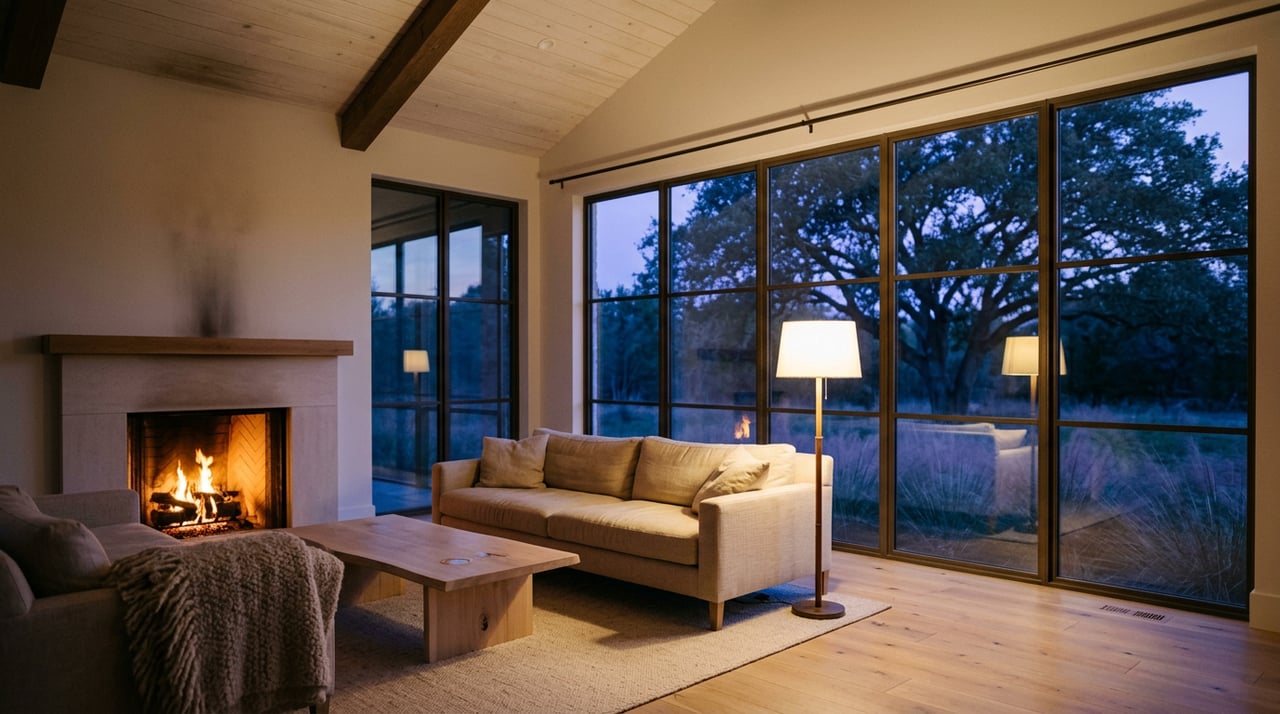
Black-framed windows and large sliding or folding doors support the modern Hill Country look. In Texas sun, high-performance low-E glass and the right solar heat gain ratings are important. Pair glazing with well-sized overhangs and porches to reduce glare and heat.
Porches and overhangs
Wide eaves extend the life of siding and trim while shading windows. Deep porches double as outdoor rooms and protect entries from heavy rain. These classic Hill Country features also help HVAC systems do less work.
Acreage due diligence tips
Buying in an unincorporated area means details can vary by lot. You protect your investment by confirming the basics early. Use this quick checklist as you tour and write offers:
- Verify water source and obtain recent well test results for yield and quality.
- Confirm septic permits and inspection history to understand capacity and maintenance.
- Ask about roof material, age, and condition, and scan eaves and soffits for rot or pest issues.
- Review site drainage and any FEMA floodplain impact along creeks or low spots.
- Request HOA or community covenants if present, including any design guidelines.
- Evaluate wildfire risk, brush management, and defensible space around structures.
Quick style and feature checklist
Use this to scan listings and short-list showings:
- Style cues:
- Ranch: single story, low profile, broad porch, L or U plan.
- Modern farmhouse: gables, board-and-batten, metal roof, black windows.
- Contemporary: flat or low roof, large glass, minimal trim.
- Transitional: gable silhouette with modern windows and mixed materials.
- Materials to note: limestone or stucco, board-and-batten, standing-seam metal roof, cedar accents, black-framed windows.
- Outdoor features: covered porch or patio, outdoor kitchen, pool or plunge pool, limestone walls, native landscaping.
- Practical items: water source, septic permits, roof age, HVAC capacity, floodplain status, acreage and easements, HOA or covenants.
Ready to narrow your search?
When you can identify Driftwood styles and materials at a glance, you move faster and with more confidence. Bring this checklist to listings, and prioritize homes with the shade, glazing, and outdoor spaces that match how you live. If you want a local, boutique team that blends lifestyle guidance with the practical stuff like wells, septic, and acreage nuances, you’re in the right place.
Reach out to the Bailey Group to tour properties, refine your wish list, and compare options. Schedule Your White-Glove Consultation.
FAQs
How to recognize Driftwood modern farmhouses
- Look for gabled rooflines, board-and-batten siding in light colors, standing-seam metal roofing, black window frames, and a prominent covered or wraparound porch.
Are metal roofs noisy or hot in storms and sun
- With solid sheathing and proper insulation, metal roofs are not noisier than shingles and their reflectivity can help reduce heat gain in hot Texas summers.
What to know about wells and septic on acreage
- Many Driftwood properties rely on private wells and septic systems, so verify permits and get recent well tests and septic inspection records during due diligence.
How do large glass walls perform in Texas sun
- Pair expansive glazing with high-performance low-E glass, well-sized overhangs or porches, and correctly sized HVAC to control solar heat and maintain comfort.
What landscaping works best for Driftwood homes
- Native, drought-tolerant plant palettes and xeriscaping reduce maintenance and water use while supporting wildfire defensible space around the home.